Chapter 1
Before the Microphone
Around 2002, Nelson was heavily involved in the world of nightclubs, events and entertainment in Colombia. That environment let him build experience in event production, hosting, artist relations, crowd management and promotion.
It was in that context that he met William Vinasco Ch.
This account comes from Nelson Vahos's own autobiographical narrative and is presented as such until independent documentation is available.
Chapter 2
The Concert That Changed Everything
Nelson invited William Vinasco to partner on a concert by salsa singer Andy Montañez, "El Niño de Trastalleres." The arrangement was simple: William provided promotion and media, particularly Candela Estéreo; Nelson provided the venue and event operations, with a capacity of roughly 2,500 people.
The artist's payment was handed to an intermediary who reportedly never transferred the funds to the artist's office. Nelson maintains that, before paying, he called Andy Montañez's representation and received authorization to hand the money to that intermediary.
According to Nelson's account, tickets sold out before the event. On the day of the concert itself, it was discovered the artist would not be traveling. A crisis followed. William Vinasco handled the situation publicly and the concert was rescheduled. In time a new date was secured, Andy Montañez performed, and the event sold out.
What matters in this chapter isn't the concert itself. Out of that crisis grew a friendship that would go on to open the doors of radio for Nelson.
This account comes from Nelson Vahos's own autobiographical narrative and is presented as such until independent documentation is available.
Chapter 3
The Door to Radio
Nelson eventually decided to step away from nightlife and events. William Vinasco saw in him a talent for storytelling, hosting and communication, though he didn't make the offer directly at first.
Nelson recalls that Luz Marina Bernate, director of Candela Estéreo, and Cindi Carolina, from the station's commercial area, came to one of his nightclubs to tell him William saw potential in his hosting style. Nelson auditioned, William approved, and that's how he formally began his career as a radio host.
"I found a world that fascinated me: communication."
This account comes from Nelson Vahos's own autobiographical narrative and is presented as such until independent documentation is available.
Chapter 4
He Didn't Want to Be Just a Host
Nelson quickly began thinking like a format creator and pitched William on the Tour de la Salsa: combining radio, artists, bars, nightclubs, promotion and the station's presence, backed by Candela Estéreo's mobile unit.
The first artist Nelson recalls being involved was Gustavo Rodríguez identity and date to be verified. The Tour de la Salsa ran through several nightclubs in Bogotá and, according to Nelson, was commercially successful and strengthened the station.
This account comes from Nelson Vahos's own autobiographical narrative and is presented as such until independent documentation is available.
Chapter 5
Azuquita para el Café
The morning show "Azuquita para el café" aired roughly from 5:00 to 10 or 11 a.m. Nelson proposed strengthening the format by bringing in William Vinasco as its lead voice; William, along with Viviana Andrade, was eventually convinced to return to such an early schedule.
The team Nelson recalls included Cristian Molina, César Agudelo, Viviana Andrade, William Vinasco and himself as the show's coordinator. Héctor Corredor — known for the "Barbarita" character on Sábados Felices — introduced him to Peter Albeiro (real name Omar Alejandro Leiva), who came from Cúcuta and had set a record for an extended joke-telling marathon record to be verified. He also recalls José Manuel Ospina, an actor who played an elderly-grandmother character.
According to Nelson's account, roughly six months later Candela Estéreo reached the top of the audience ratings in Bogotá. Fact to be verified before presenting as objective
This account comes from Nelson Vahos's own autobiographical narrative and is presented as such until independent documentation is available.
Chapter 6
The Mistake That Changed My Path
In the constant search for content and audience, prank calls were part of the show. Nelson created a staged kidnapping scenario targeting an aunt, with sound effects and a call meant to make her believe he had been kidnapped and that money was being demanded. His aunt suffered severe distress and, according to Nelson's account, required medical attention.
Nelson acknowledges today that it was a tasteless joke, that he failed to consider the consequences, and that it was especially irresponsible given Colombia's context of kidnapping and extortion at the time. A listener reported the incident to La W, other outlets began questioning the content, and Nelson also recalls regulatory consequences involving the then Ministry of Communications. Regulatory documentation to be verified
Nelson understood he had crossed a line and chose to voluntarily leave Candela Estéreo, so his mistake wouldn't end up destroying the friendship he had built with William Vinasco.
"Success can also make you believe you always have to go further. Sometimes going further means crossing lines that should never have been crossed."
"That crisis didn't end my career. It changed the kind of communicator I wanted to be."
This chapter is treated with particular care: it is not presented as entertainment, it is not excused, and it is not dramatized.
My Years at Candela Estéreo
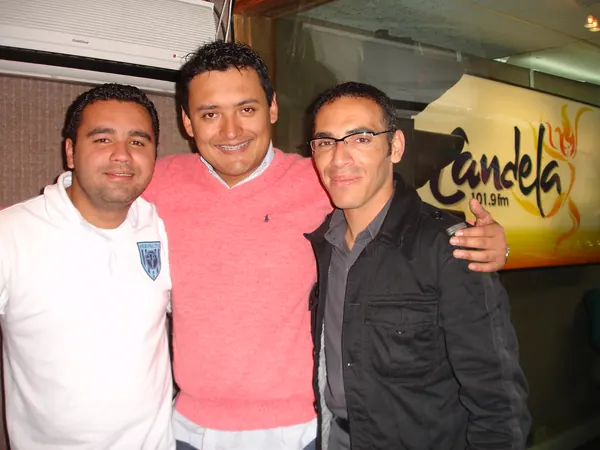
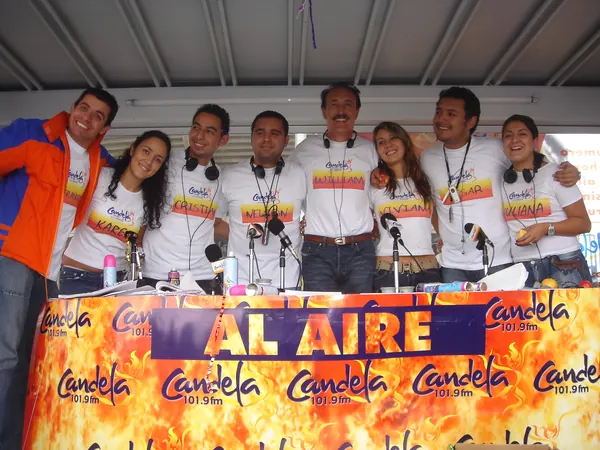
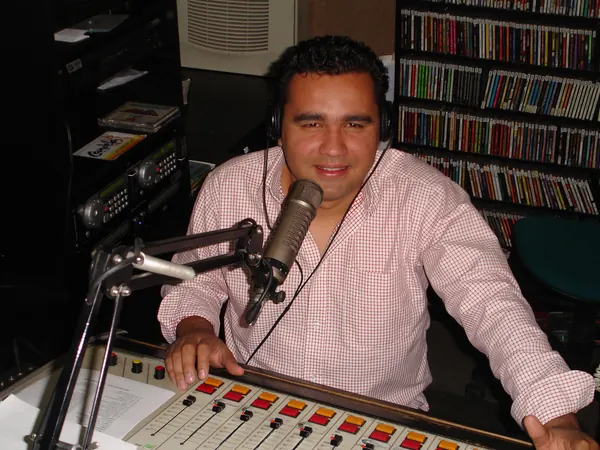
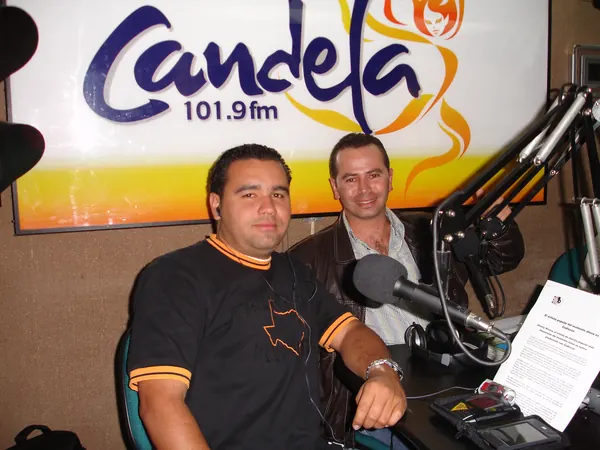
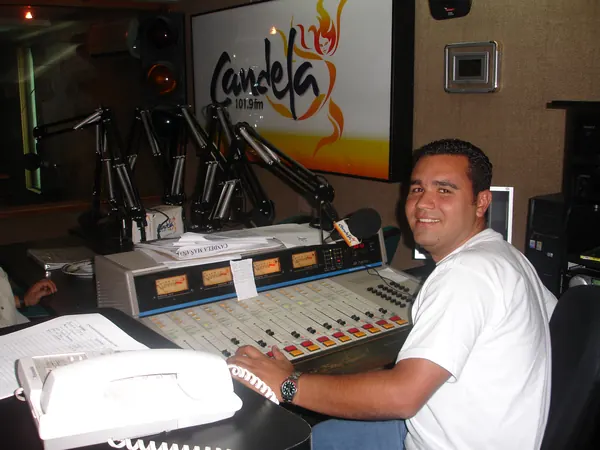
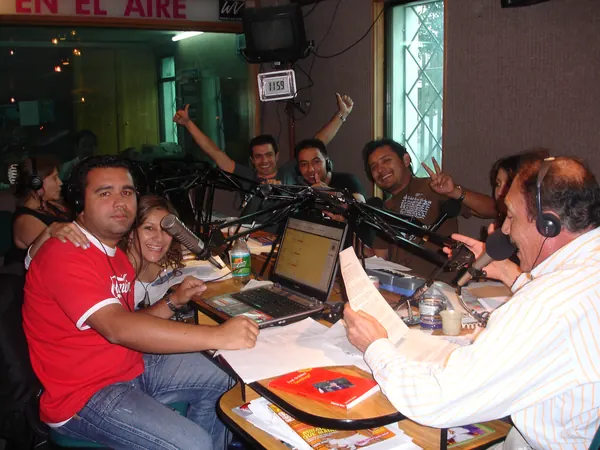
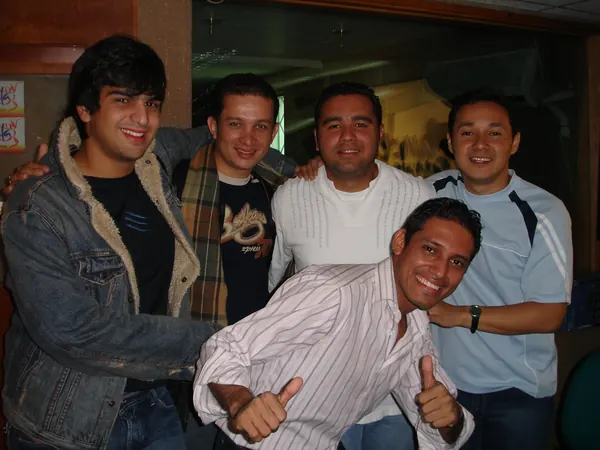
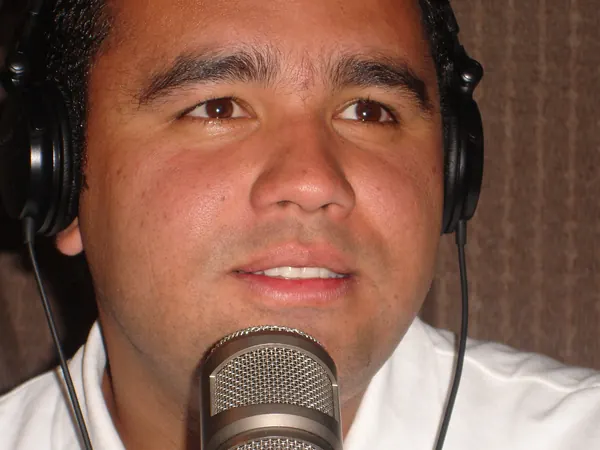
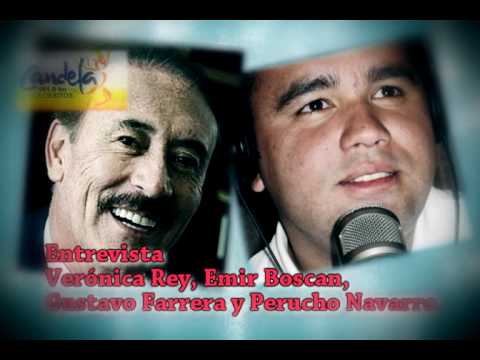
Candela Estéreo became the school where Nelson Vahos moved from the experience gained on stages and at live events into the daily work of being behind a microphone. This collection documents different moments from that period: live broadcasts, studio work, team-building, guests, and a formative era in his development as a communicator.

Radio Beyond the Studio
The Candela Estéreo years also included on-location features shot outside the booth. In 2012, part of the station's team took part in the "Soldier for a Day" experience at Tolemaida, recorded on video as part of the archive from that era.
See the feature →2008 — A Prank That Marked a Turning Point
During my time at Candela Estéreo, one of the most controversial episodes of my radio career took place. On the show Azuquita Pal Café, I took part in a prank call built around a staged kidnapping. What was conceived at the time as comedic content ended up causing distress, listener backlash and significant public controversy.
Over the years I came to understand that this episode also had to be part of my story — not to justify or hide it, but to acknowledge it as an experience that deepened my understanding of the responsibility that comes with being behind a microphone.
The fallout reached beyond Colombia, and the case was documented by international media. Today I keep that coverage as part of the historical archive of my professional career.
See the full record in the Historical Archive →Investigative Chronicles
During this period I also produced a series of investigative chronicles for Candela Estéreo. Some of those audiovisual pieces survive today and are part of this historical archive.
Explore the chroniclesChapter 7
eRadio Global Is Born
After leaving conventional radio, Nelson decided to build a different model: a radio station with a social purpose, one that wouldn't rely solely on pranks, controversy or chasing audience for its own sake, but would use communication to serve, inform, help and connect.
eRadio began in Colombia as a free internet signal, with very few resources. The project grew gradually, and with the support of people and community, equipment, studios, structure, programming and production slowly came together.
"We started from the ground up."
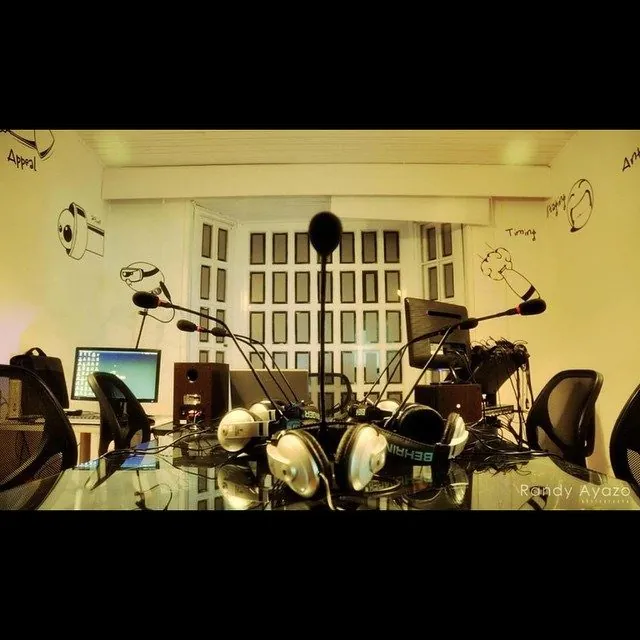
eRadio Global's first studio
This photograph represents the medium's earliest stage, when eRadio began structuring itself as an internet station built on a social mission and very limited resources.
Material exists featuring notable figures from Colombia, including material related to Iván Duque. The exact role, date and context of that material will be confirmed before it is published in the archive.
Building eRadio's First Team
This photograph represents one of eRadio's founding moments: the process of building a human team and training hosts around a vision of communication with purpose.
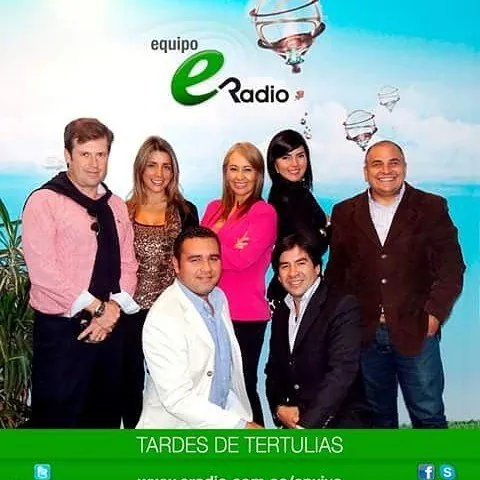
eRadio's first team of hosts
Photograph of eRadio's first team of hosts, trained by Nelson Vahos. People identified: Javier León Herrera, Luis Carlos Rodríguez, Lucero Aguilera, Nelson Vahos, Juan Carlos Torres, [NAME TO BE CONFIRMED], [NAME TO BE CONFIRMED].
When eRadio Began Reaching National Voices
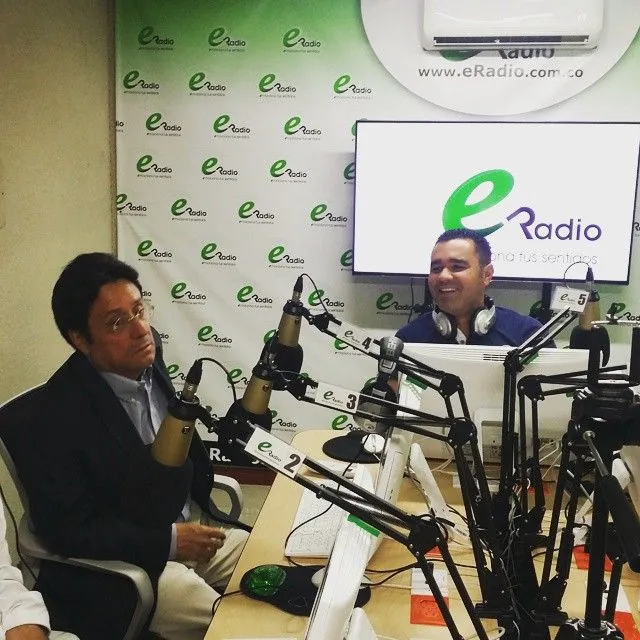
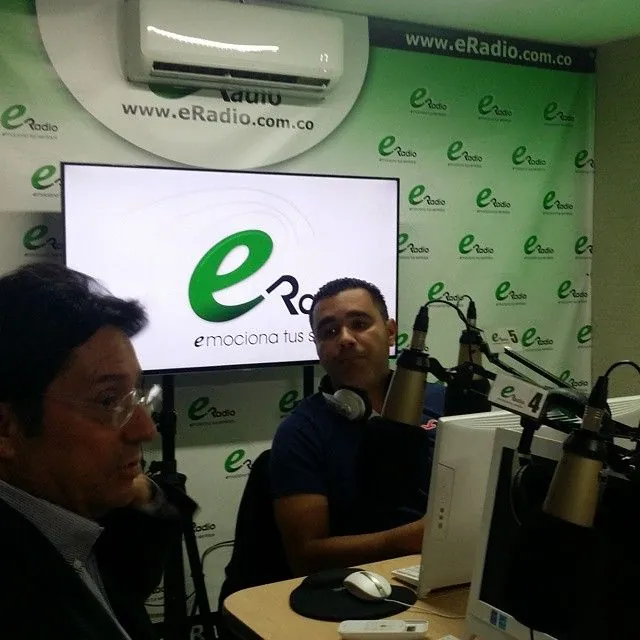
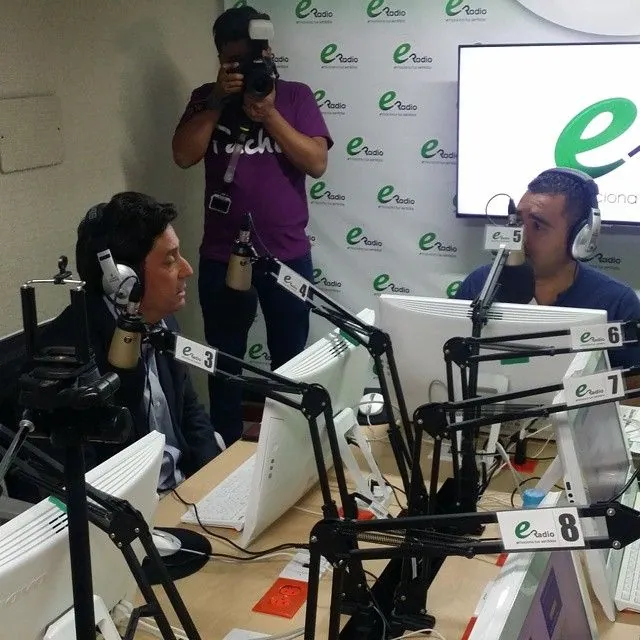
During eRadio's consolidation in Colombia, the outlet began welcoming guests from politics, entertainment and other areas of public life, including a visit by Francisco Santos Calderón to eRadio's studios.
Chapter 8
Changing Countries Without Abandoning the Mission
Nelson later migrated to Canada. That move opened a new chapter defined by a new country, a new language, cultural adaptation, a different news agenda, professional rebuilding, the immigrant community and new communication needs.
This second major chapter — eRadio's evolution in Canada, the incorporation of eRadio Global Corp., and the launch of El Podcast del Migrante and Desafío 100 Empresas — will be documented in greater depth in future updates to this site.
Section in progress — the full story of the Canada years will be addedBrooks 2025 Election Coverage
In 2025, eRadio Global carried out a special coverage of the Brooks municipal election, interviewing candidates for mayor and city council, speaking with the outgoing mayor, and organizing a debate between the two mayoral contenders.
The initiative expanded eRadio Global's role as a space for local information and community participation, bringing direct protagonists of Brooks public life into its studios.
Explore the election coverageJBS Canada: Leadership and Community
eRadio Global's growth also opened up institutional coverage opportunities in Brooks. During JBS Canada activities, the outlet conducted interviews with members of the company's leadership and representatives of local public life.
These conversations are part of the audiovisual record of a period in which eRadio Global expanded its presence across business, community and institutional spaces in Brooks.
Explore the interviews